
HomeServicesLawn treatments, seeding & soil testing

Lawn treatments, seeding & soil testing

We test before we treat. It's slower than guessing, cheaper than re-seeding twice, and it's the reason our lawns hold up in August.

Every thin, patchy, weed-choked lawn in Sevier County has a story, and the soil tells it: pH knocked sideways by our native clay, compaction from construction traffic, or years of guess-and-pour fertilizer. Reading that story first is the difference between a lawn that establishes and seed that washes into the storm drain.
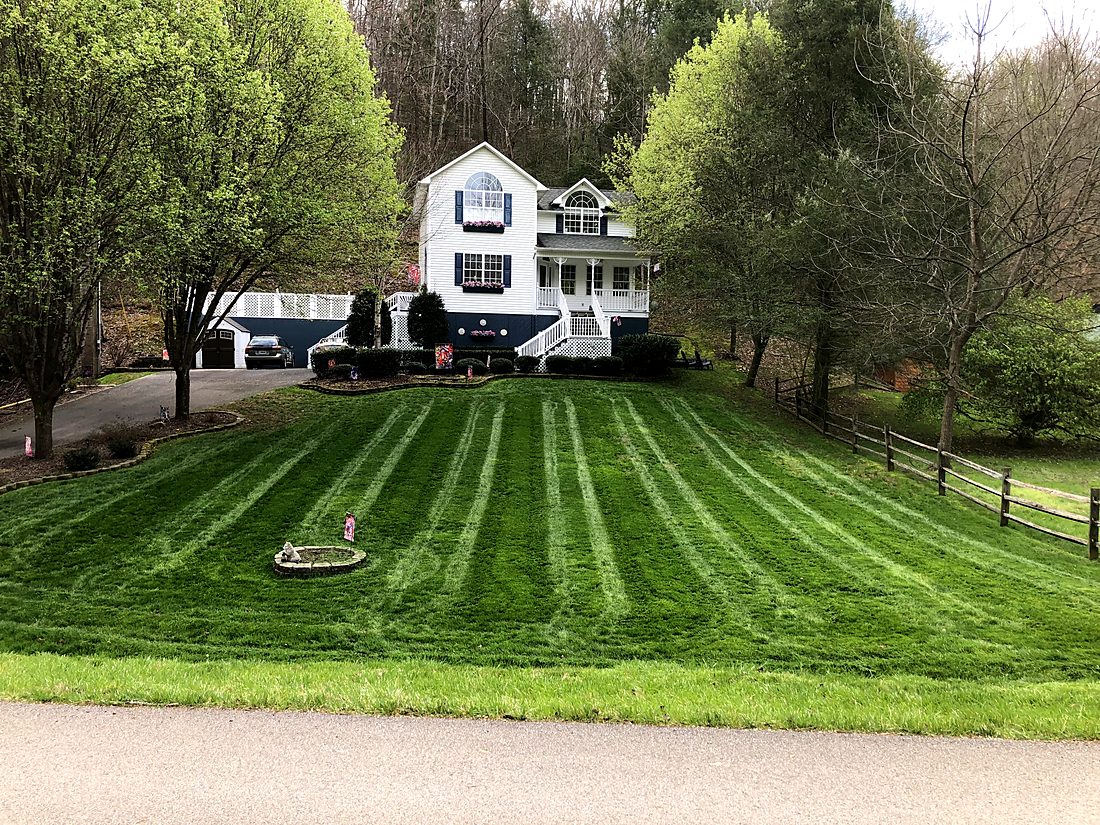
Thick, striped fescue lawn after a season of treatments

The process

  • Soil test — pH, nutrients, organic matter
  • Correction — lime, amendments, aeration as needed
  • Seed — fescue blends proven in East Tennessee
  • Season-long treatment plan to carry it through

Why East Tennessee lawns struggle

Our red clay is naturally acidic, and fescue wants a pH near neutral — without lime, fertilizer just sits there unused. Add a droughty August and the January freeze-thaw cycle, and an unfed lawn thins a little more every year. The fix isn't more product; it's the right product, in tested amounts, at the right points in the season.

Once a lawn is established, regular mowing at proper height protects the investment, and pruning and leaf care keeps the rest of the property in the same shape.

Treatment plans run across Sevierville, Seymour, and Pigeon Forge.

Common questions

When is the best time to seed a lawn in Tennessee?

Early fall — mid-September through October. Soil is still warm, the air is cooling, and fall rain carries new fescue through to winter. Spring seeding can work but fights summer heat before roots are deep. If you call in June, we'll usually tell you to spend the summer fixing soil and seed in September; that honesty is free.

Why do you test soil before treating a lawn?

Because product poured on untested soil is money poured out. A test tells us pH, nutrients, and organic matter, so lime and fertilizer go down in the amounts the lawn actually needs. Elizabeth, one of our early customers, hired us specifically because Dan tested her soil first — it's been our way of working from the start.

What is a season-long lawn treatment plan?

A scheduled series of applications across the growing year — pre-emergent in late winter, feeding matched to the soil test, spot weed control, and fall prep — instead of one-off treatments. One season of coordinated care visibly outperforms years of random bag-from-the-store applications.

Can you fix bare patches without redoing the whole lawn?

Usually, yes. Compaction, shade, or drainage kills patches while the rest of the lawn is fine. We fix the cause, prep the spots, and seed to blend — a full renovation only makes sense when more than about a third of the lawn is gone.

Free estimates

Tell us about your yard

Call (865) 850-3940 weekdays 8–5, or send the form and we’ll get back to you.

Request your free estimate

Tell us what you need and we’ll get right back to you.

Call (865) 850-3940